
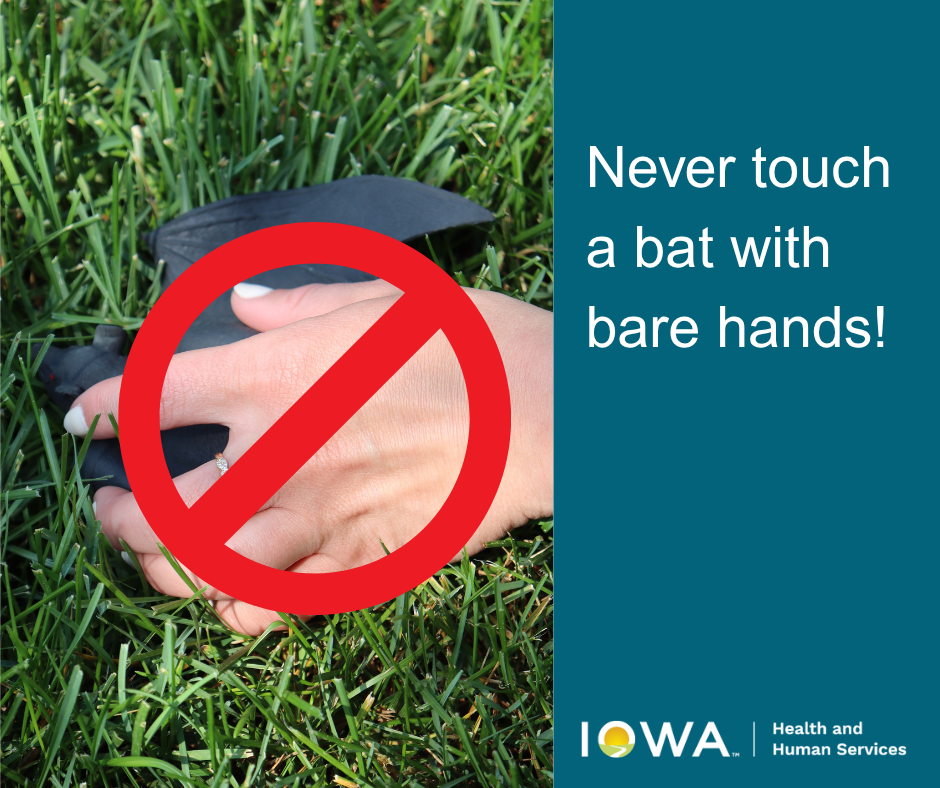
Bats play key roles in our ecosystem by eating insects, pollinating plants and scattering seeds. However, some can also carry diseases that are dangerous for humans, like rabies, a fatal virus spread from mammals to humans. Over the past few years, most human cases of rabies in the United States have been caused by bat bites.
Any bat can carry the virus, and it’s impossible to tell if a bat has rabies by looking at it. This is why you should never touch a bat, and immediately see a doctor if you think you may have been bitten or scratched by a bat.
Abnormal behaviors for bats include being:
• Active during the day
• Unable to fly from elevation
• Easily approachable
• Found in a place where they are not usually seen (like in your home or on your lawn)
What if you find a bat outside?
Bats are wild animals, surviving best when outside in their natural environment. If you see a bat outside you can look, but don’t touch. If you find a bat on the ground and it appears sick or injured, NEVER touch it.
Wild animals are not used to being touched by people and touching them may cause further injury or stress and even pose a health risk to you.
What if you’re bitten or scratched by a bat?
If you, a member of your family, or one of your pets is bitten or scratched by a bat immediately wash the wound with warm soapy water and seek medical care. Anyone bitten by the bat should undergo rabies post-exposure prophylaxis (PEP), a series of multiple vaccines, as soon as possible to prevent becoming ill. Rabies is a fatal infection but people who have been exposed can prevent illness and death if they seek care before symptoms start. If the bat can be captured it will be tested for rabies. If it tests negative, PEP is not necessary.
For more information about rabies, visit hhs.iowa.gov/health-prevention/animal-handling-safety/rabies or contact the Center for Acute Disease Epidemiology at
800-362-2736 with questions. For non-urgent questions email rabies@hhs.iowa.gov.
What if you find a bat in your home?
Click here for more information from Iowa HHS.